News
Released in 1960, this song quietly blurred the line between rock and country with aching harmonies and disarming honesty.
Released in 1960, “When Will I Be Loved” stands as one of the defining moments in the Everly Brothers’ remarkable career—a song that didn’t just succeed on the charts, but quietly helped shape the evolving relationship between rock, pop, and country music.
Appearing on the album The Fabulous Style of the Everly Brothers, the track captured a turning point in American popular music, when youthful rock ’n’ roll energy began merging with the emotional directness of country storytelling.

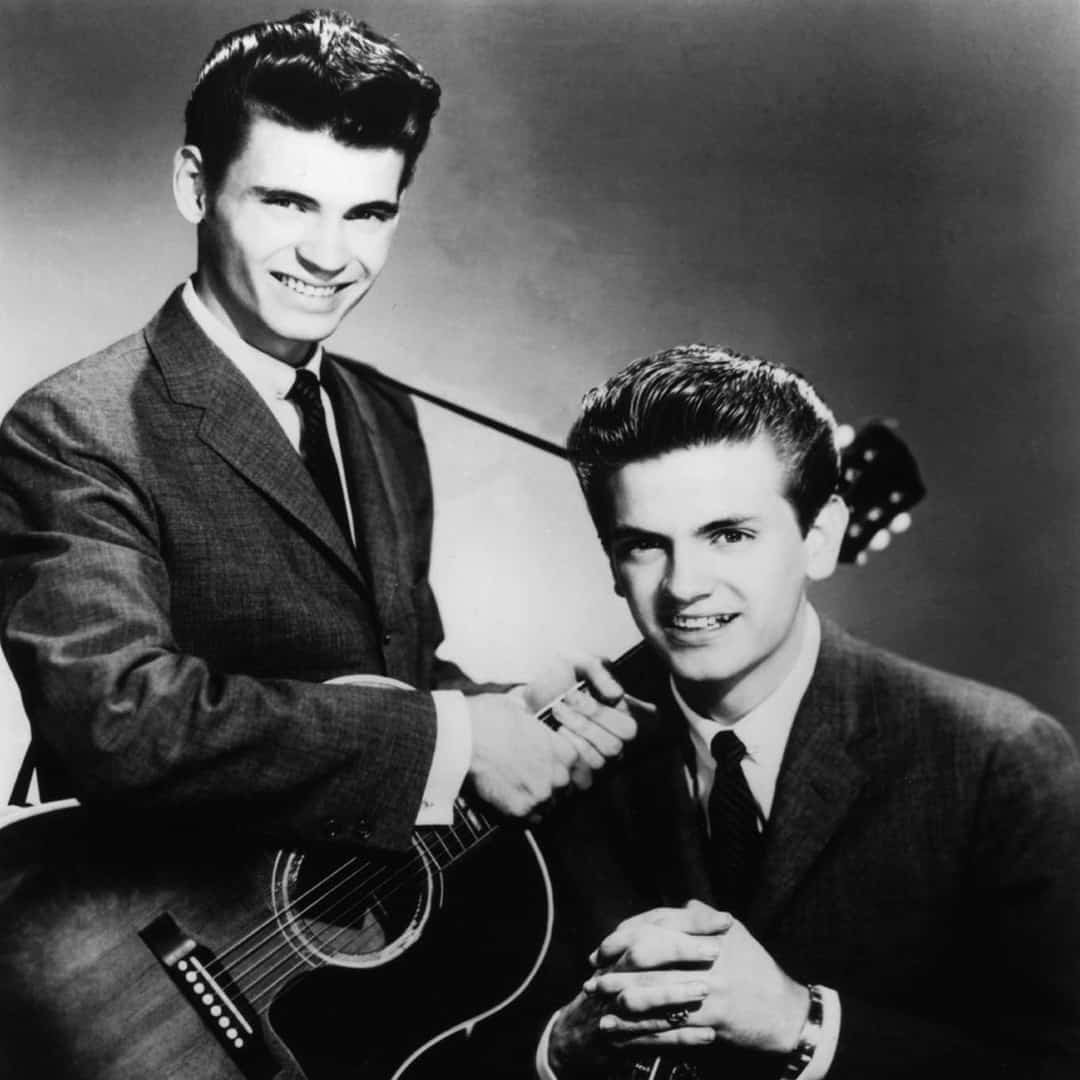
By the time the song arrived, Don and Phil Everly were already establishing themselves as pioneers.
Raised in a musical family steeped in Appalachian country traditions, the brothers had absorbed gospel harmonies, folk ballads, and early rock rhythms from a young age.
Their sound—built around close, almost inseparable vocal harmonies—set them apart from their contemporaries.
Where many acts relied on solo charisma, the Everlys sang as one voice split in two, creating a style that felt intimate, conversational, and instantly recognizable.
“When Will I Be Loved” distilled that identity into just over two minutes of music.
Written by Phil Everly, the song explored a timeless theme: the quiet ache of loving sincerely and being disappointed in return.
Rather than dramatizing heartbreak, the lyrics express it with restraint, asking a simple question that resonates across generations.
That emotional simplicity became one of the song’s greatest strengths, allowing listeners to project their own experiences onto its gentle longing.
Musically, the track reflected the Everly Brothers’ gift for blending genres without diluting any of them.
The bright, rhythmic guitar figure provided a rockabilly pulse, while the clean chord progressions and melodic structure nodded toward country roots.
Beneath it all, a steady bass line and understated percussion kept the song moving forward without ever overwhelming the vocals.
Everything served the harmonies—and those harmonies were the heart of the record.
Don and Phil’s vocal interplay on “When Will I Be Loved” remains a masterclass in balance.
The seamless movement between lead and harmony lines created a richness that felt effortless, yet precise.
Their voices didn’t compete; they complemented one another, reinforcing the song’s emotional vulnerability.
It was a sound that would go on to influence countless artists, from The Beatles and Simon & Garfunkel to later country-rock performers.
The song’s legacy only grew with time.
Though a hit in its own right, “When Will I Be Loved” took on new life in 1975 when Linda Ronstadt recorded her version, bringing the song back to the top of the charts and introducing it to a new generation.
Her success underscored the song’s versatility and confirmed its place as a bridge between eras, styles, and audiences.
More than six decades later, “When Will I Be Loved” endures not because of production tricks or lyrical complexity, but because of its honesty.
It represents a moment when popular music learned that simplicity, sincerity, and harmony could be just as powerful as volume or spectacle.
For the Everly Brothers, it was another step toward immortality.
For music history, it was proof that genre boundaries were meant to be crossed—and that great songs never stop asking questions listeners still feel today.
