News
Released in the mid-1980s, this song captured a feeling far deeper than its era’s sound. It wasn’t about heartbreak, but about memory, distance, and wondering if you still exist in someone else’s thoughts. Even decades later, it lingers like a name you almost say out loud.
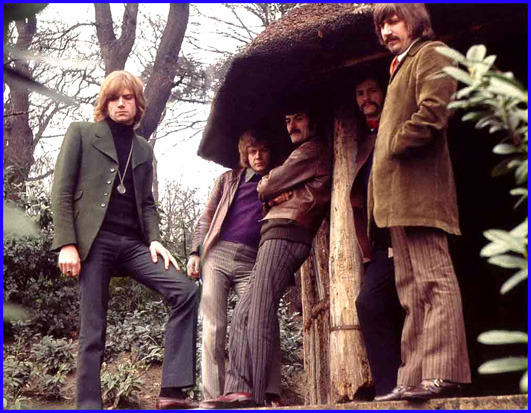
In the long and storied career of The Moody Blues, “Your Wildest Dreams” (1986) stands as a clear testament to the band’s ability to adapt to changing musical eras while preserving their core artistic identity.
It is not merely a nostalgic hit, but a refined study of how 1980s popular music could reconcile emerging technology with timeless emotional expression.
From a compositional standpoint, Justin Hayward constructs “Your Wildest Dreams” on a familiar pop framework, yet enriches it with harmonies of notable depth.
The song opens with soft layers of synthesizers, creating a hazy, floating sensation that mirrors the gradual surfacing of memory.
When Hayward’s vocal enters, the melody does not rush forward, but instead gently guides the listener into the narrator’s inner emotional landscape.
The song’s central theme revolves around nostalgia for a lost love, but what makes “Your Wildest Dreams” distinctive is its emotional restraint.
Rather than descending into sorrow or desperation, the track carries a quiet tone of acceptance.
The line “I wonder if you think about me once upon a time” feels less like a plea and more like a fleeting thought—fragile, sincere, and deeply human.
In terms of arrangement, the blend of light electric guitar, delicate piano, and distinctly 1980s synthesizers creates a soundscape that feels both modern and familiar.
The guitar does not lead the song, but functions as a warm foundation that subtly supports the emotional core.
The piano appears sparingly and purposefully, reinforcing the song’s narrative quality without interrupting its melodic flow.
One of the song’s most striking qualities is how The Moody Blues control its emotional peak.
The chorus does not explode with intensity, but instead broadens the feeling horizontally, allowing longing to spread rather than surge.
This sense of restraint is precisely what gives the song its lasting emotional power, growing more resonant with each listen.
The music video for “Your Wildest Dreams” also deserves recognition for deepening the song’s meaning.
By placing past and present side by side, the visuals directly reflect the song’s central themes.
It stands as a defining example of how imagery can expand musical storytelling and embed a song more firmly in collective memory during the MTV era.
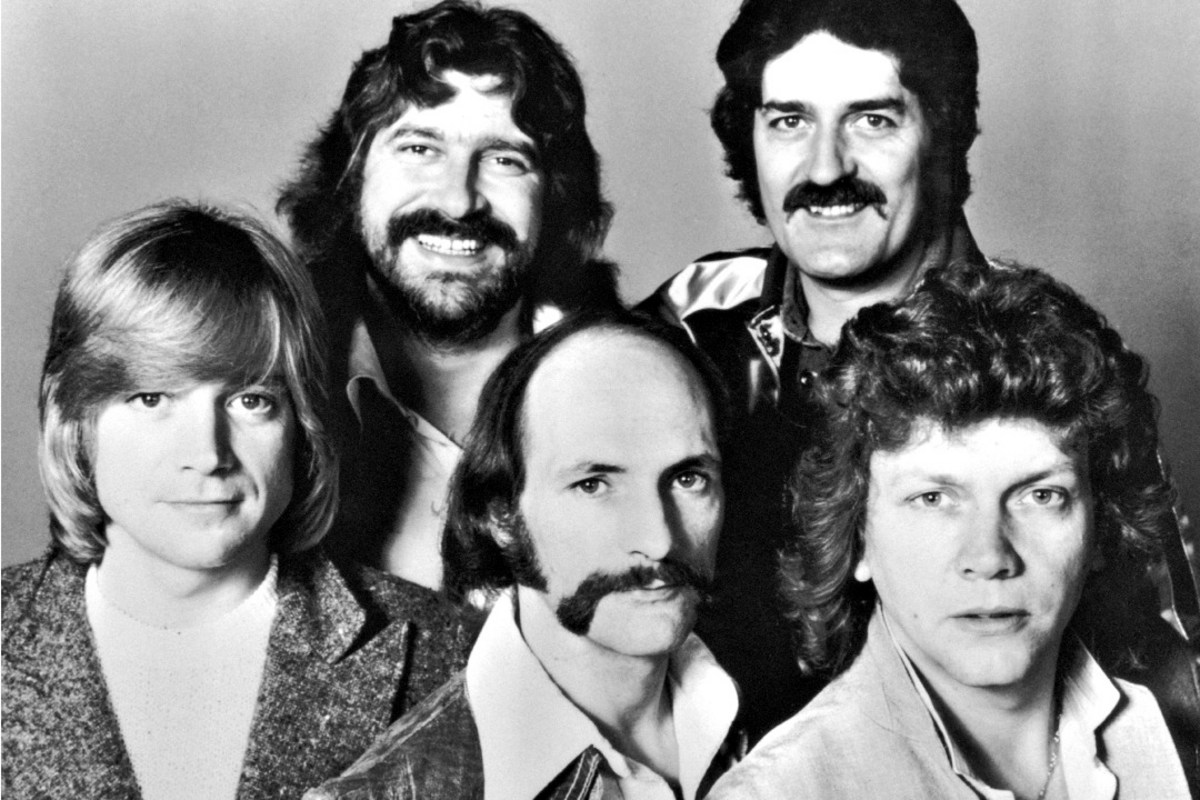 Within the context of The Other Side of Life, “Your Wildest Dreams” serves as a bridge between The Moody Blues’ progressive rock origins and their 1980s electronic evolution.
The track proves that innovation does not require sacrificing depth, but can instead make emotion more accessible.
Nearly four decades after its release, “Your Wildest Dreams” continues to endure because it is not confined to a specific moment in time.
While its sound may carry the unmistakable imprint of the 1980s, its emotional core remains timeless.
It is a song for quiet moments, when listeners look back and wonder how much they once meant in someone else’s memory.
In that sense, “Your Wildest Dreams” is not simply a successful pop song, but a subtle meditation on memory, time, and loss.
Its story is told through melody, harmony, and the meaningful silence between notes.
